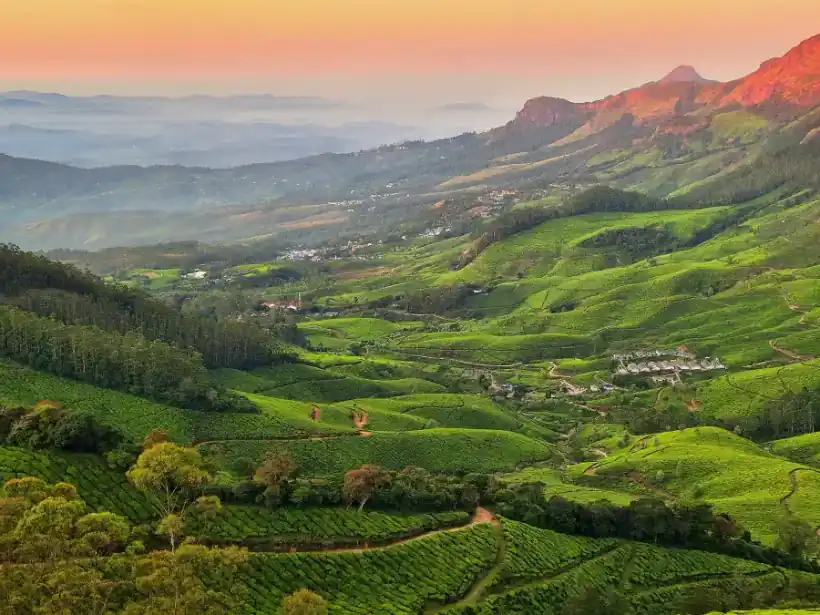
Tea-covered hills, cool air and a story shaped by the Western Ghats.
HISTORY & PLACE STORY
Munnar rises where three mountain streams meet in Kerala's high ranges. Tea estates sweep across the slopes, shola forests fill the folds between hills, and mist changes the view by the hour.
The town grew around plantation history, but its deepest value is the mountain ecosystem around it. A thoughtful visit combines scenic viewpoints with local tea, slow drives and respect for fragile highland habitats.
BEST TIMEDecember to February for cool, clear mornings; June to September for lush monsoon scenery.
SUGGESTED STAY2-3 days
What to experience
- Tea Museum and working estate landscapes
- Eravikulam National Park when access is open
- Mattupetty, Kundala and Top Station viewpoints
- Early-morning drives before clouds build
Taste locally
- Kerala breakfast with puttu and kadala
- Fresh cardamom tea
- Local spice products
- Homestyle Kerala meals
Where to stay
- Munnar town - convenient for restaurants, shops and first-time visits
- Pothamedu or Pallivasal - hillside resorts and plantation views
- Chinnakanal or Devikulam - quieter stays with longer drives to town
Family and responsible travel tips
- Carry a light jacket even on sunny days
- Book park tickets ahead in busy seasons
- Avoid stopping vehicles on narrow bends
- Use marked viewpoints and established paths
Nearby places
- Eravikulam National Park
- Mattupetty Dam
- Kundala Lake
- Marayoor
Munnar's modern tea landscape developed during the plantation era, while its surrounding shola-grassland ecosystem is far older and ecologically rare.